In this guide · 9 sections
The short answer
The Decision Review System (DRS) lets a fielding captain or a batter challenge an on-field umpire's decision. The third umpire then checks it with replays, ball-tracking and edge detection. Each team gets a limited number of unsuccessful reviews per innings, so choosing when to use one is part of the game.
AI overview
Key takeaways
- After an on-field decision, the batter or fielding captain signals a review with a T shape.
- Ball-tracking, which predicts the ball's path for LBW decisions.
- When ball-tracking shows the ball only clipping the stumps or the line, the evidence isn't strong enough to overturn the decision.
- Goexch markets suspend while a review is in progress, then reopen once the decision is final.
How does a DRS review work?
After an on-field decision, the batter or fielding captain signals a review with a T shape. The third umpire checks replays and technology, then tells the on-field umpire whether to keep or overturn the decision.
What technology does DRS use?
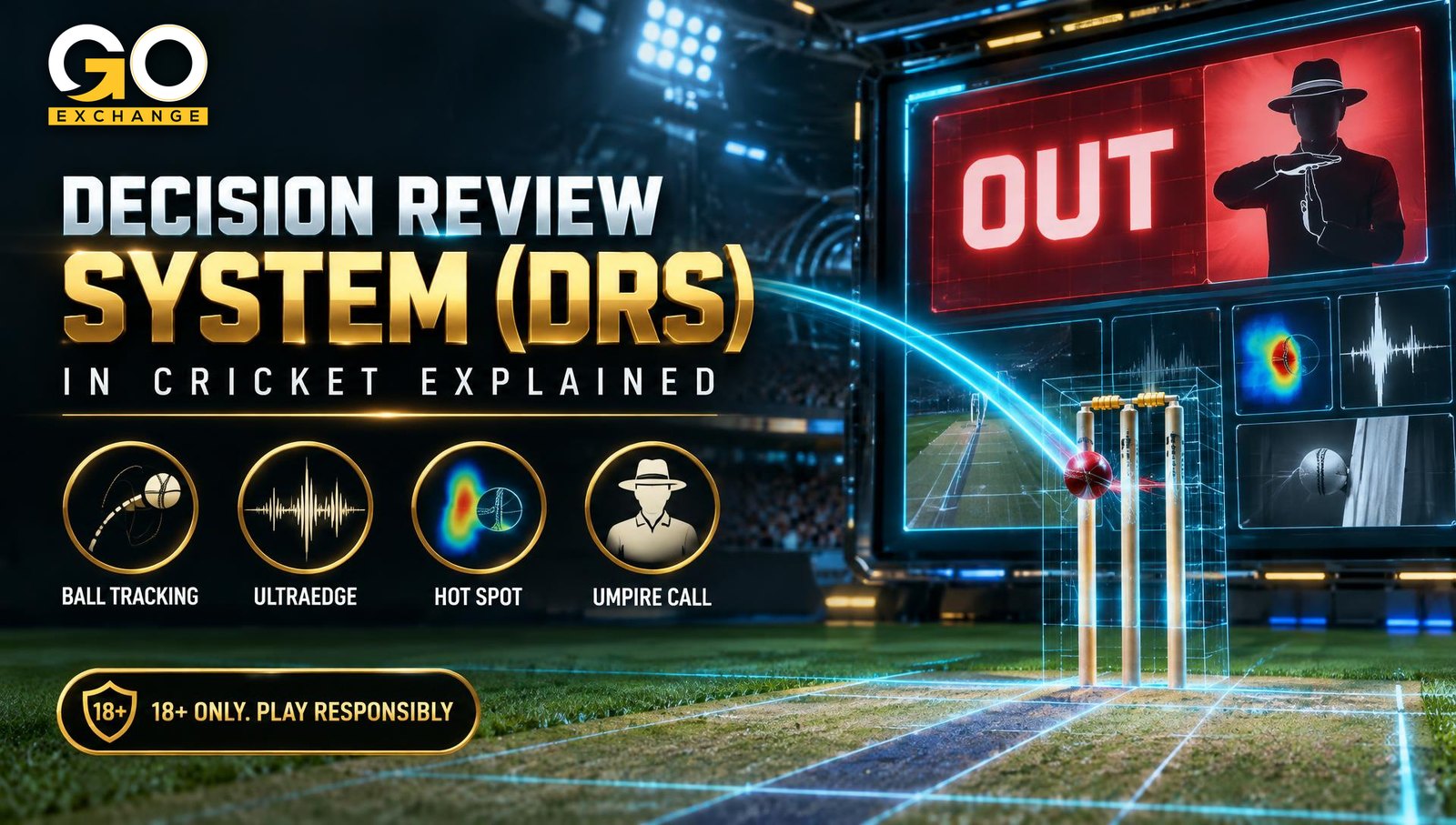
- Ball-tracking, which predicts the ball's path for LBW decisions.
- Edge detection such as UltraEdge, which uses sound to show whether the ball touched the bat.
- Slow-motion replays from several camera angles.
- Thermal imaging such as Hot Spot, in some series.
What does umpire's call mean?
When ball-tracking shows the ball only clipping the stumps or the line, the evidence isn't strong enough to overturn the decision. The on-field call stands, and the reviewing team keeps its review.
How does DRS affect live betting?
Goexch markets suspend while a review is in progress, then reopen once the decision is final. A wicket overturned on review can swing session and match odds sharply, so don't try to bet during a review.
How is an LBW checked on review?
Ball-tracking answers three questions in order. Did the ball pitch outside leg stump? If so, it can't be out. Did it hit the pad in line with the stumps, unless the batter offered no shot? And would it have hit the stumps? Only when all three point to out is it given. Marginal answers to the last two fall into umpire's call.
How long does a player have to review?
Under ICC playing conditions, the request must come within 15 seconds of the decision. That's why captains consult the bowler and keeper quickly.
Where did DRS come from?
The system was first trialled in a Test series between India and Sri Lanka in 2008 before becoming part of international cricket's playing conditions. Ball-tracking and sound-based edge detection now do most of the work.
How should bettors think about DRS?
- A team with no reviews left is more exposed to a wrong decision late in an innings.
- Close LBW calls often end as umpire's call, so the original decision tends to stand.
- Settlement follows the final decision after any review, not the first signal.
Questions
Frequently asked questions
Short answers about cricket on Goexch. Still stuck? Support replies on WhatsApp at any hour.
Still have a question?
Support is online 24/7
Message us on WhatsApp or live chat, in English or Hindi.
Ask support